Artificial intelligence is reshaping the factory floor, the energy grid, and the supply chain — but its promise comes bundled with hard ethical questions that industrial leaders can no longer defer. At IIoT World, we’ve tracked the debate since the earliest deployments of machine learning in operational technology environments, and the tension between AI’s efficiency gains and its risks to worker safety, algorithmic fairness, and decision transparency has only sharpened. This article examines the good, the bad, and the genuinely ugly dimensions of AI ethics in industrial settings — drawing on real deployments, regulatory pressure, and the lived experience of engineers and operators on the shop floor.
Luckily, this is the storyline from the Terminator movies and not real life. But could it be that we’re reaching a point where artificial intelligence is set to take control of humanity and make decisions devoid of emotions like sympathy and empathy? Let’s start the “Is Artificial Intelligence Good or Bad” debate!
Is artificial intelligence good or bad?
AI can be good or bad, it really depends on who you ask and how it is used. High performance computing has already proven a machine’s ability to perform advanced calculations far faster and more accurately than the human mind. The question is: Who should be in control of decision making?
Artificial intelligence vs. deep learning vs. machine learning
Artificial intelligence is nothing new. The term was coined in 1955 by John McCarthy and debated and discussed at the Dartmouth Summer Research Project on Artificial Intelligence in 1955 by the founding fathers of artificial intelligence.
Since then, we’ve seen AI in hundreds of movies and fictional stories from Star Wars and The Avengers to Bicentennial Man and Ex Machina. Unfortunately, there’s no agreed-upon definition of artificial intelligence.
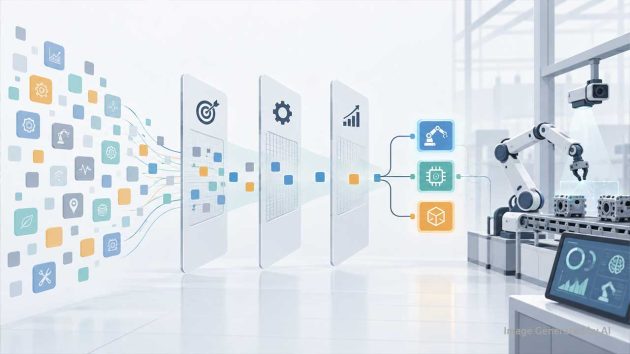
We do know that deep learning and machine learning are subsets of artificial intelligence. Machine learning is based on algorithms and statistical models where a prediction is made based on inputs. Almost all AI is built upon machine learning.
Deep learning is simply about scale since advancements in compute have made it possible to do more processing than traditional machine learning. The key differentiator between machine learning and deep learning, according to one expert, is in the number of layers of nodes that the input data passes through.
Benefits of AI to humanity – Why artificial intelligence is good
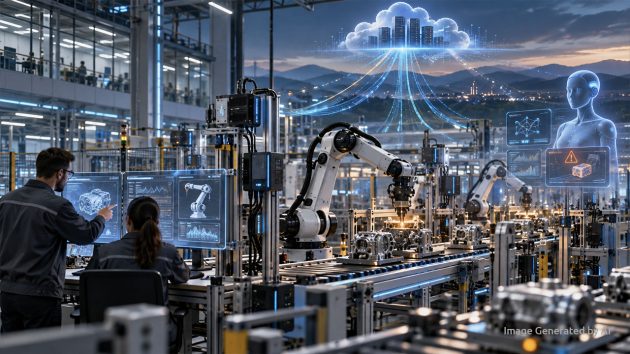
Artificial intelligence is poised to benefit humanity in nearly unlimited ways—for example, more accurate clinical imaging and diagnoses, fewer traffic accidents and resulting death and improved retention through immersive learning. With sensors becoming less expensive and wireless networks the norm, AI can help manufacturing plants with:
- Predictive maintenance – Machine learning and deep learning can help manufacturers predict machine failure and increase operating efficiency by reducing unnecessary downtime, repair or replacement and ensuring worker safety.
- Asset management – Sensors and machine learning can also help manufacturers automate the tracking and monitoring of the location, condition, state, and utilization of connected assets throughout the supply chain, enabling them to cut time to market and increase revenue.
- Workforce automation – Finally, AI can help manufacturers grow their businesses with automated logistics for better quality products and improved productivity, production rates, and worker safety.
While these benefits will help manufacturers better compete in the global marketplace, there is a dark side to AI looming ahead.
Combatting the dark side of AI – Why artificial intelligence is bad
Today, conflicts around the world are fought by people with an ever-increasing access to more lethal weapons. But they are still fought by people. While the loss of human life is unavoidable in war, that loss of life and empathy are typically what brings a war to its end.
If we replace “fighters” with autonomous weapons, more civilians will be at risk than ever before. Machines making decisions on how to attack, who to attack and where to attack-combined with the ability to manipulate networks, communications and security-provide the recipe for a third World War fought between countries and an artificial intelligence.
While this doomsday scenario is likely not in our immediate future, addressing or preventing (or defending against) an autonomously fought war between countries, or other debatable uses of AI, must be on the radar of today’s world leaders.
See also: What are the real risks of using AI in manufacturing? — a companion IIoT World analysis
Using data for good
For manufacturing businesses, a recent article noted: “There’s also no question that artificial intelligence holds the key to future growth and success in manufacturing.” A survey in the same article reported that 44 percent of automotive and manufacturing sector respondents classified artificial intelligence as “highly important” in the next five years, while almost half—49 percent—said it was “absolutely critical to success.”
Artificial intelligence will continue to present massive opportunities for all humankind and be a force for good. By using machine learning and deep learning ethically, we can all solve big problems not only in manufacturing, we can make great progress on solving the world’s problems. More about AI Key Success Factors for Achieving Maximum Business Value
AI is here, so join the movement and help use #dataforgood.
 This article was written by Mike Trojecki, the vice president of IoT and analytics at Logicalis US, responsible for developing the company’s strategy, partnerships, and execution plan around digital technologies.
Frequently Asked Questions: Ethics of AI in Manufacturing
1.What benefits does AI offer to manufacturing operations?
AI enables predictive maintenance where machine learning can predict machine failure and increase operating efficiency by reducing unnecessary downtime, repair or replacement, and ensuring worker safety. Sensors combined with machine learning help automate tracking of connected assets throughout supply chains, reducing time to market and increasing revenue.
2. How important do industry leaders consider AI for the future of manufacturing?
Industry surveys show that 44% of automotive and manufacturing respondents call AI highly important in the next five years. The article states there is no question that artificial intelligence holds the key to future growth and success in manufacturing.
3. What ethical risks does the article identify with AI deployment?
The article raises concerns about autonomous weapons, where machines making decisions on how to attack could create unprecedented civilian risk.