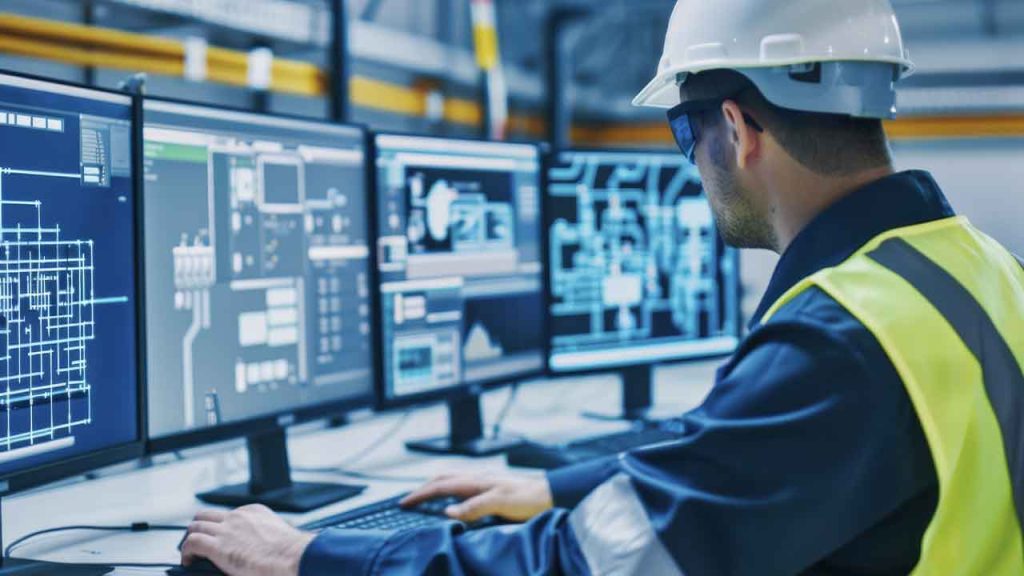
Remote Terminal Units have evolved from simple data acquisition devices into intelligent edge platforms capable of running cybersecurity protocols, predictive analytics, and autonomous control logic at the network’s outermost points. In this article, IIoT World examines how smart RTUs are transforming the security and efficiency of distributed industrial operations, from oil and gas pipelines and water treatment facilities to remote power substations. Readers will learn how embedded encryption, anomaly detection, and local decision-making capabilities reduce both cyber risk and unplanned downtime, while enabling operators to extend digital transformation to assets that were previously too remote or too resource-constrained to monitor effectively.
Cybersecurity remains one of the most pressing challenges in industrial operations, but the biggest risk isn’t just external threats—it’s how companies manage and control access to critical infrastructure. James Redmond, Global Offer Manager for SCADA & Telemetry at Schneider Electric, discusses how new smart RTU solutions are transforming security, efficiency, and scalability in industrial environments.
Bringing IT-Level Security to OT Networks
One of the biggest challenges in securing industrial networks is bridging the gap between IT and OT. Schneider Electric’s latest SCADAPack RTU software update integrates IT security solutions like Active Directory, Syslog, CyberArk, and SolarWinds directly into OT environments. This allows industrial organizations to leverage their existing security infrastructure and training without requiring extensive additional investment.
Role-Based Access Control: Reducing Human Error and Security Risks
Human error remains a leading cause of cybersecurity breaches. Managing credentials on industrial RTUs is time-consuming and requires manual updates for each device. Redmond explains how Schneider Electric’s new role-based access control (RBAC) model streamlines this process by linking OT authentication to Active Directory. Instead of updating credentials device by device, administrators can remove or adjust access with just a few clicks, reducing errors and improving security compliance.
Simplifying Security Compliance with IEC 62443
With IEC 62443 becoming the industry standard for OT security, industrial companies must continuously improve their cybersecurity posture. Schneider Electric’s SCADAPack RTU solutions are designed to align with these evolving standards, making it easier for organizations to meet regulatory requirements and withstand penetration testing. By integrating privileged access management tools, the solution helps ensure compliance while maintaining seamless operations.
Enhancing Operational Efficiency Through Automation
Many industrial facilities operate in remote, resource-constrained environments where efficiency is critical. Redmond highlights how smart RTUs equipped with Linux processing and Docker support allow companies to run data analytics at the edge, reducing bandwidth consumption and optimizing data transmission. By leveraging Python, C, and Node-RED, operators can develop custom applications to further streamline workflows and improve responsiveness.
A Future Built on Secure, Scalable Industrial Networks
Redmond envisions a future where smart RTUs serve as security gatekeepers and efficiency enablers. By integrating advanced authentication, role-based access, and edge computing capabilities, industrial organizations can mitigate risks, automate compliance, and enhance resilience against cyber threats.
Sponsored by Schneider Electric
FAQ Section
1. What makes a smart RTU different from a traditional RTU?
A traditional RTU primarily collects data from field sensors and relays it to a central SCADA system with minimal onboard processing. A smart RTU adds edge computing capabilities, allowing it to run analytics, cybersecurity agents, and local control logic directly at the remote site. This means the device can detect anomalies, encrypt communications end-to-end, and make time-critical decisions without waiting for a round trip to the control center. Smart RTUs also typically support modern protocols like MQTT and OPC UA alongside legacy protocols such as Modbus and DNP3, bridging the gap between older infrastructure and modern IIoT architectures.
2. How do smart RTUs improve cybersecurity for remote industrial assets?
Smart RTUs improve cybersecurity by embedding encryption, secure boot processes, and role-based access controls directly into the hardware and firmware layer. Many models include built-in intrusion detection that monitors for unauthorized configuration changes, unexpected protocol traffic, or firmware tampering. Because these security functions run locally, they continue to protect the asset even when connectivity to the central SOC is interrupted, which is a common scenario for remote pipeline, water, and energy infrastructure where network reliability is variable.
3. Can smart RTUs support predictive maintenance at remote sites?
Yes. Smart RTUs equipped with edge analytics can process vibration, temperature, pressure, and flow data locally to identify early signs of equipment degradation. By running lightweight machine learning models on the RTU itself, operators receive condition-based alerts without transmitting raw high-frequency data over expensive satellite or cellular links. This approach reduces communication costs by up to 90% compared to cloud-only predictive maintenance architectures while still enabling maintenance teams to schedule interventions before failures occur, significantly reducing unplanned downtime at remote or unmanned facilities.
Related from IIoT World: