
Jessica Wachtel of InfluxData explains how a unified namespace replaces the ISA-95 pyramidal hierarchy with a centralized single source of truth for IIoT data, combining the safety benefits of isolated device controls with modern cloud capabilities and MQTT publish/subscribe communication models.
What Problems Does ISA-95 Create for Modern Manufacturing?
The ISA-95 model kept device controls safely isolated from internet connections, but created integration complexity across PLC, SCADA, MES, and ERP layers, slow data processing that prevented real-time decisions, high implementation costs, and poor scalability.
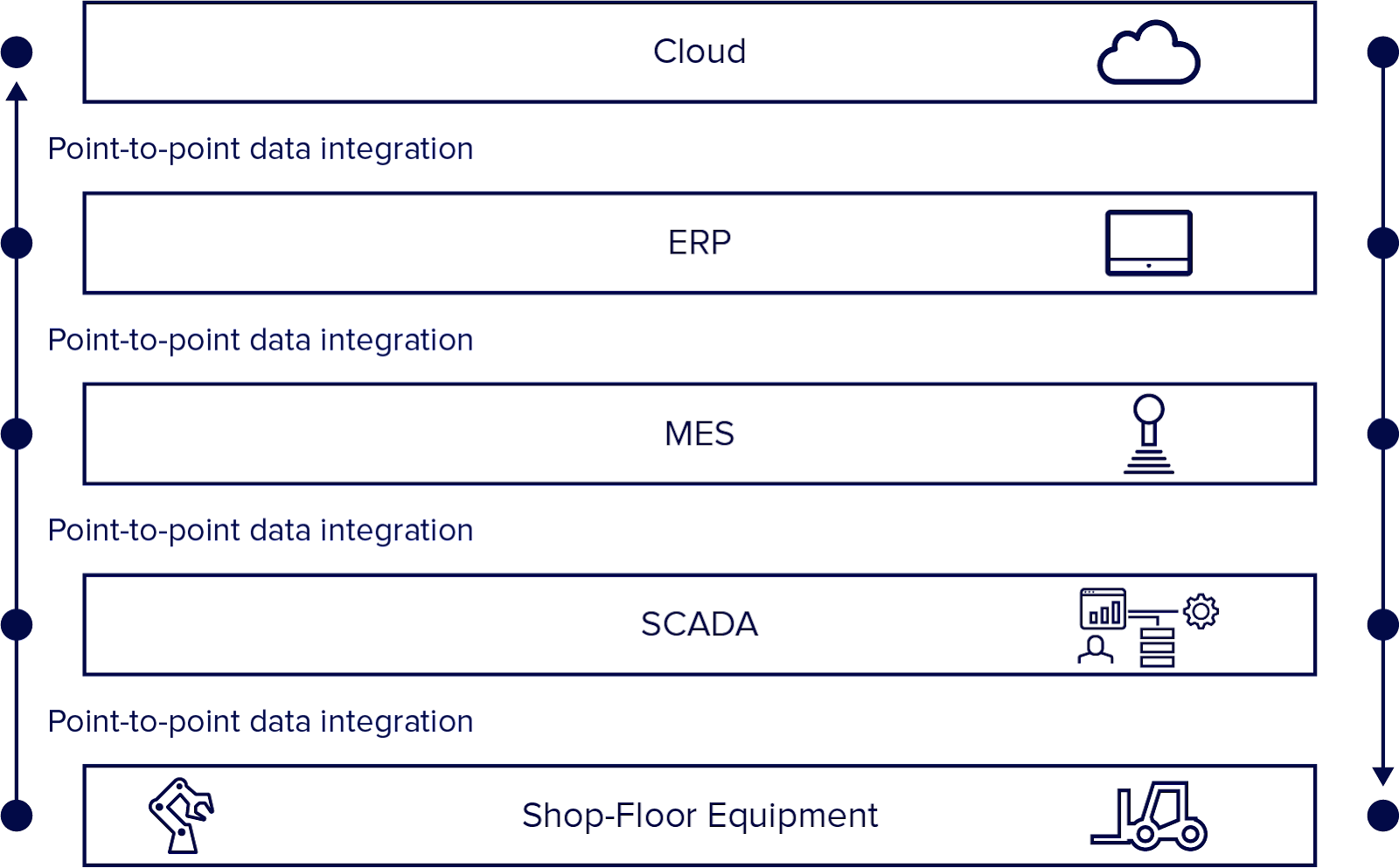
The ISA-95 functional model got a lot right. Keeping machine controls and devices far from internet connections was and still is a best practice. The point-to-point connections between systems are smart design because they keep systems as safe as possible. The hierarchal design introduced specialty software to factories. Integrating multiple systems meant there didn’t need to be a one-size-fits-all for a plant’s overall control system and day-to-day business activities.
But this model also leaves much to be desired. Communication protocols, data formats, and standards create integration and interoperability complexities between PLC, SCADA, MES, and ERP layers. Data transformations between systems and the many point-to-point data integrations lead to slowdowns in data ingestion and output speed, making real-time decision-making impossible. Additionally, ISA-95 is expensive to implement, doesn’t scale well, and the tightly coupled architecture can make even a small system change challenging.
How Does a Unified Namespace Improve on ISA-95?
A unified namespace prioritizes information exchange over rigid hierarchies, using MQTT brokers with publish/subscribe models so data flows only where needed and components operate without tight dependencies on each other.
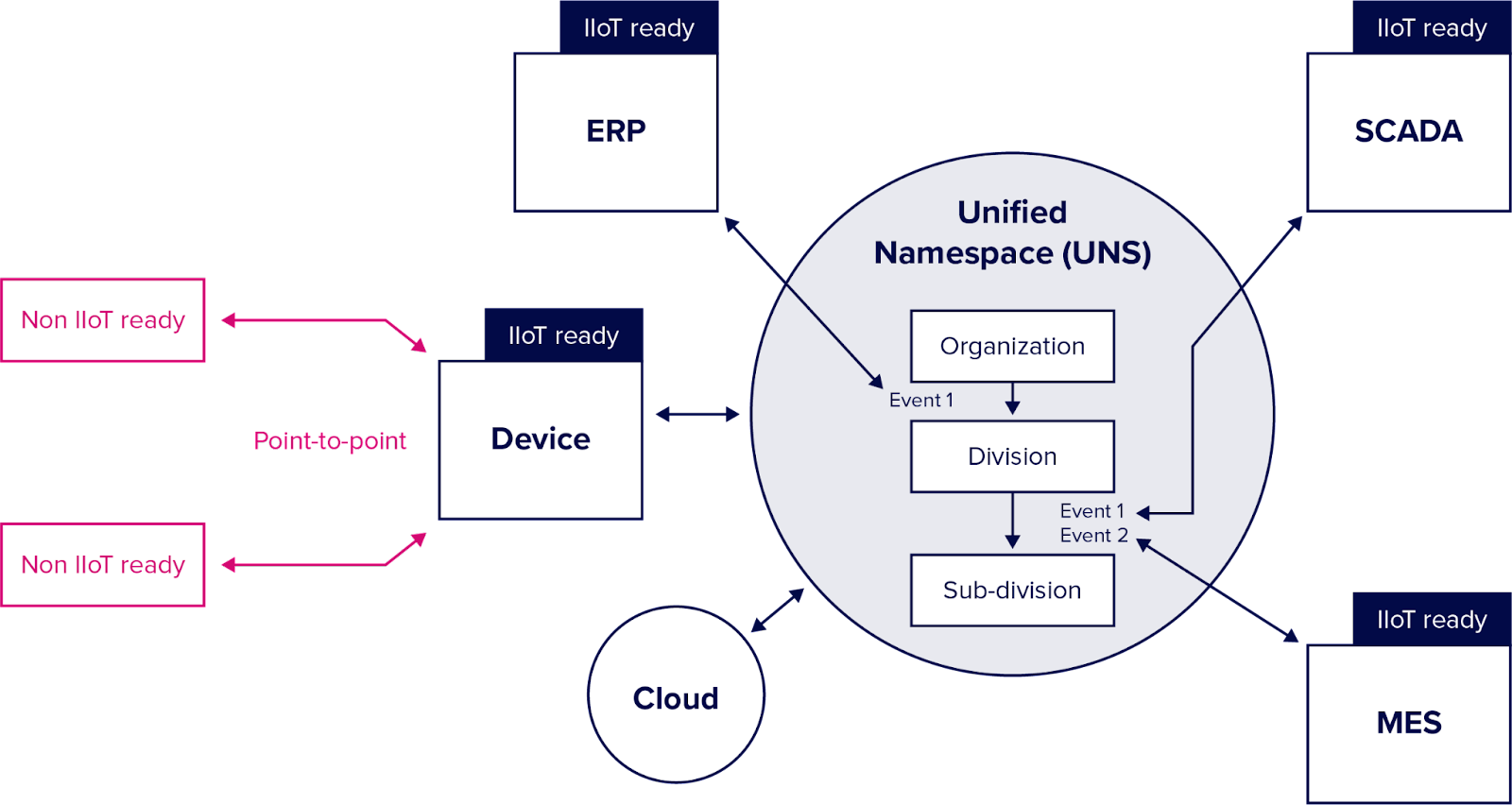
The unified namespace can live anywhere as long as it’s accessible by every network participant. This means that a unified namespace can connect to the internet and the cloud, but it isn’t required to. A common implementation of a unified namespace architecture is with an MQTT broker. The popular publish/subscribe model that underpins MQTT is also beneficial to a unified namespace because it promotes data exchange between the devices creating data and those that need it. Because not all data applies to all systems and devices, MQTT publishes events from each device to relevant topics, and any applicable system or device can subscribe to those topics to access the event data.
In this setup, data only goes where it needs to and gets there faster. Changing machines or systems becomes easier because the remainder of the architecture doesn’t rely on the other components.
What Benefits Does a Unified Namespace Deliver?
Organizations gain organization-wide data accessibility, faster anomaly detection, reduced redundancy and maintenance overhead, and the flexibility to integrate IoT devices, cloud services, and AI/machine learning tools.
Of course, with so many devices generating data, it’s critical to have a place to store and manage all that data. Sensors generate time-stamped data (also known as time series data), which has some unique characteristics and workload requirements. Having the right storage solution can make or break your unified namespace project. A traditional relational database quickly breaks down with the volume and velocity of data from industrial devices at scale, and a data historian lacks the connectivity and interoperability to get the full value from your data. A purpose-built, time series database, like InfluxDB, ensures that you can do everything you need to do with your data.
Real-time access to integrated and standardized data—as well as organization-wide viewing accessibility—results in quick, data-driven decision-making, faster anomaly detection, and better analytics and reporting. Reduced redundancy, streamlined data management processes, and minimized system maintenance efforts result in less overhead and simplified maintenance and management.
These improvements lead to a future-proof business. The unified namespace is flexible and scalable. It’s also adaptable to emerging technologies, including new IoT devices, cloud services, and artificial intelligence and machine learning applications. The unified namespace fosters innovation.
How Does a Unified Namespace Change OT and IT?
Unified namespaces blur traditional boundaries between operational technology and information technology, allowing industrial organizations to innovate with modern cloud capabilities while maintaining the operational safety that ISA-95 provided.
For a comprehensive overview of UNS architecture, see What Is a Unified Namespace and How Does It Work in Manufacturing? on IIoT World.
About the author
 This article was written by Jessica Wachtel. She is a Developer Marketing Writer at InfluxData where she creates content that helps make the world of time series data more understandable and accessible. Jessica has a background in software development and technical journalism.