
Generative AI promises a revolution on the shop floor—faster decision-making, adaptive production, smarter quality control. But ask any manufacturing leader what’s actually slowing things down, and you won’t hear about algorithms. You’ll hear about data.
At IIoT World’s Manufacturing Day, the conversation around GenAI quickly turned from excitement to infrastructure. The verdict? Manufacturers aren’t short on ambition. They’re short on accessible, structured, contextualized data.
Why Are Manufacturers Data-Rich but AI-Poor?
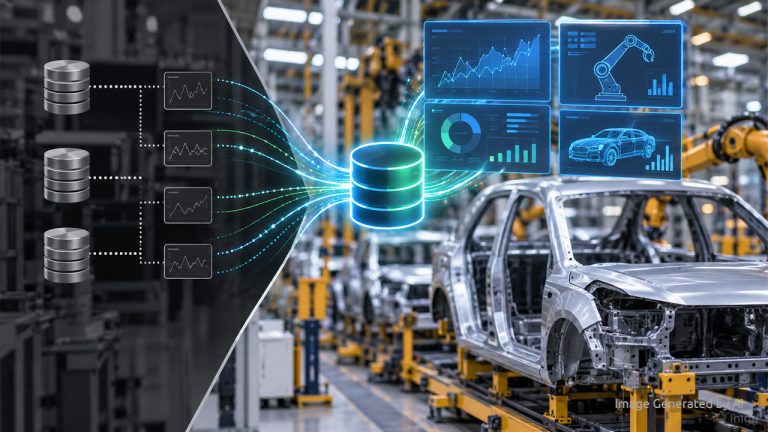
Despite being surrounded by sensors, machines, and control systems, most manufacturers don’t have the kind of clean, labeled, or connected data required for GenAI to do its job. In many plants, critical process data is trapped in legacy systems, spreadsheets, paper logs—or not captured at all. Without integration, AI can’t deliver anything meaningful.
Why Does Manufacturing AI Require Data Lineage?
In high-stakes environments, explainability matters. A black-box model that can’t trace its recommendation back to source data is dead on arrival. That’s why vendors and manufacturers alike are focusing on lineage and governance: knowing where data comes from, how it’s transformed, and whether it can be trusted.
Why Is Data Context the Real GenAI Bottleneck?
Not all data is created equal. Even when it’s available, manufacturing data often lacks context. A sensor might detect a vibration spike—but without knowing what was running, who was operating, or what material was in use, it’s just noise. Successful GenAI use cases rely on stitching together multiple sources—ERP, MES, IoT, manuals—into a coherent, usable narrative.
Why Does Collaboration Beat Proprietary Data Silos?
If data is the new oil, many companies are still hiding barrels in different sheds. A key takeaway: manufacturers must shift from a “protect at all costs” mindset to a “collaborate for value” one. This doesn’t mean open-sourcing IP. It means building internal data platforms and trusted partnerships that allow secure sharing and model training on proprietary but siloed information.
Why Should Manufacturers Start with Data Plumbing?
The best GenAI strategy in manufacturing doesn’t start with pilots. It starts with plumbing: data accessibility, standardization, and secure infrastructure. The companies winning with AI are the ones that treat data readiness as core infrastructure—not a side project.
Written based on insights from the session “Generative AI in Manufacturing: From Design to Production Optimization,” part of IIoT World Manufacturing Day 2025.
Related articles:
FAQ
1. Why do most GenAI projects fail in manufacturing?
Manufacturers are not short on ambition; they are short on accessible, structured, contextualized data. Despite being surrounded by sensors and control systems, most factories lack the clean, labeled, or connected data required for GenAI to function. Critical data remains trapped in legacy systems, spreadsheets, and paper logs.
2. What does data lineage mean for manufacturing AI?
A model that cannot trace its recommendation back to source data is not viable in regulated manufacturing. Data lineage means tracking where data originates, how it has been processed, and what assumptions were applied, so that AI outputs can be explained and audited.
3. Why is data context critical for manufacturing GenAI?
A sensor might detect a vibration spike, but without knowing what was running, who was operating, or what material was in use, the reading is just noise. Successful cases require stitching together ERP, MES, IoT, and manual data into coherent narratives that give AI the context it needs.
4. What is the recommended first step for manufacturing GenAI?
The best GenAI strategy in manufacturing does not start with AI pilots or model selection. It starts with data plumbing: accessibility, standardization, and secure infrastructure that make factory data usable. Collaboration across data sources and systems produces better outcomes than proprietary silos or isolated experiments.
Related Reading
Data Governance Fails Without Culture Change
The Hidden Advantage of Generative AI in Manufacturing: Speed, Not Just Smarts