
Scaling smart manufacturing with IIoT, machine learning, and generative AI requires moving beyond isolated pilots to systems that deliver measurable value across entire operations. At IIoT World Manufacturing Day, Tim Gaus, Greg Sloyer, and Sanjay Bhatia outlined the infrastructure decisions, cultural changes, and AI strategies that make factory-wide deployment practical.
At IIoT World Manufacturing Day, the session “Accelerating Innovation and Agility in Manufacturing with IIoT and Machine Learning” brought together three leaders who have been in the trenches of digital transformation: Tim Gaus, Greg Sloyer, and Sanjay Bhatia.Their collective experiences painted a picture of manufacturing that is not just smarter, but also more practical, people-centered, and scalable.
Why Do Smart Manufacturing Pilots Fail to Scale?
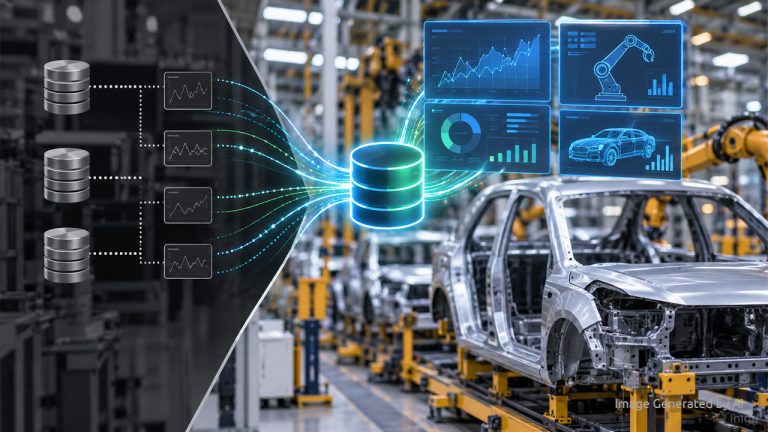
Smart manufacturing pilots fail to scale when they are designed for a single line or plant rather than multiple sites. According to Tim Gaus, standardized data models built from the start let companies replicate solutions across facilities without rebuilding each time. Sanjay Bhatia adds that factory PCs often lack the processing capacity for heavy AI workloads, making lightweight, edge-first models practical. Greg Sloyer identifies the gap between IT and OT teams as an equally significant barrier.
How Are IIoT and ML Used in Manufacturing Today?
IIoT and machine learning are applied in manufacturing for defect prevention, energy management, and predictive maintenance. Panelists described ML models trained in the cloud and deployed at the edge to catch quality issues before they disrupt production, edge gateways that detect unusual power consumption patterns, and combined IT and OT data streams that shift plants from reactive repairs to predictive maintenance, directly improving Overall Equipment Effectiveness (OEE).
What Is Generative AI’s Role in Manufacturing?
Generative AI in manufacturing functions as a knowledge multiplier rather than a replacement for operational expertise. According to Sanjay Bhatia, generative AI helps manufacturers ask better questions and makes technology easier for frontline teams to use. GenAI systems convert maintenance manuals, technician notes, and machine logs into concise recommendations. Multi-agent systems support operators in reducing errors, while advanced analytics still depend on domain expertise and structured ML models.
How Do You Scale Smart Manufacturing Beyond Pilots?
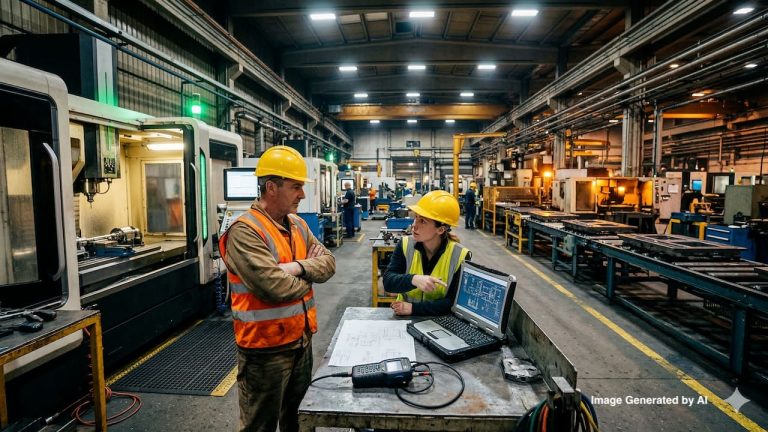
Scaling smart manufacturing beyond pilot projects requires four practices: starting with business goals tied to revenue, safety, or efficiency; designing solutions for replication across multiple sites from the beginning; involving operators, engineers, and technicians early to build trust and usability; and grounding every initiative in strong data governance and domain expertise. These practices, outlined by Tim Gaus, Greg Sloyer, and Sanjay Bhatia at IIoT World Manufacturing Day, shift the focus from demonstrating potential to delivering consistent, site-wide results.
What Is the Path to Agile Manufacturing with IIoT?
The combination of IIoT connectivity, machine learning, and generative AI creates the foundation for agile manufacturing at scale. As Greg Sloyer stated, “The combination of IIoT, enterprise data, and generative AI is the key to accessing innovation and agility in manufacturing.” IIoT supplies the connectivity layer, ML delivers predictive intelligence, and generative AI makes complex operational knowledge accessible to frontline teams.
This article was written based on the session “Accelerating Innovation and Agility in Manufacturing with IIoT and Machine Learning”, part of IIoT World Manufacturing Day. For upcoming events, visit iiotday.com.
Related articles:
How to Select and Fund AI Use Cases