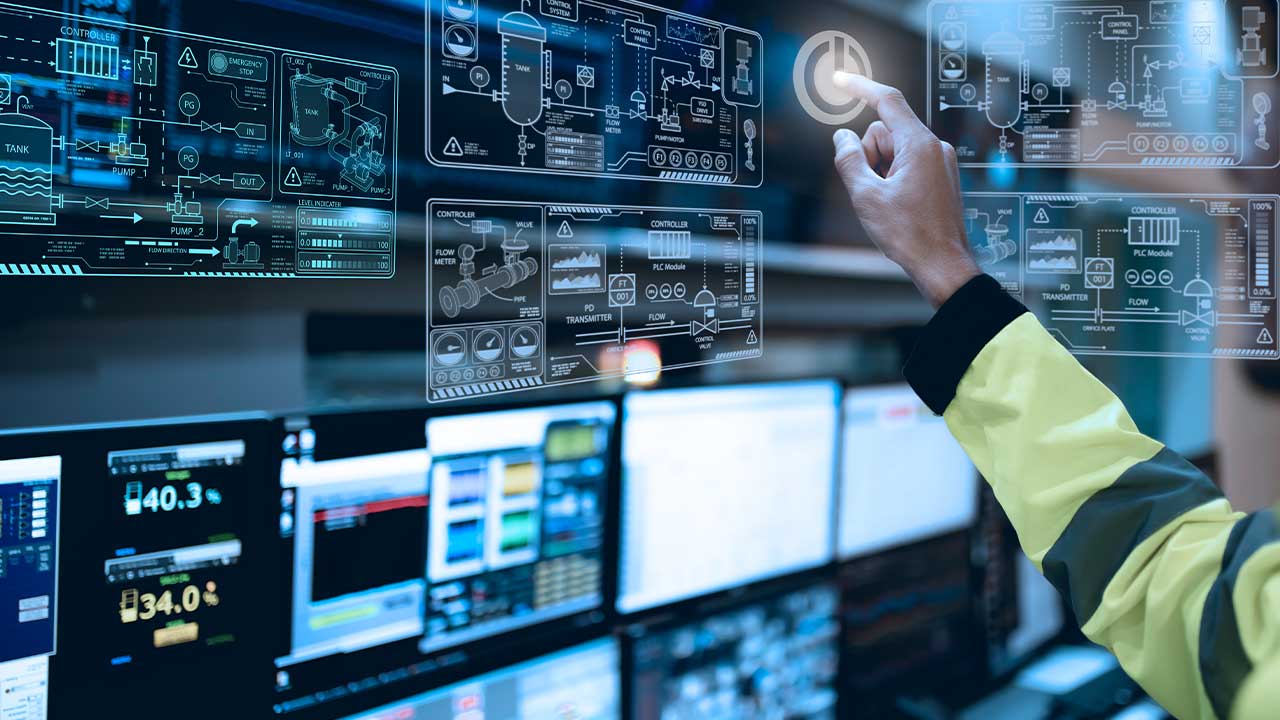
Manufacturers are moving control systems off physical hardware and into virtual environments to reduce downtime, lower costs, and respond faster to production needs.
As industrial automation evolves, more manufacturers are looking to virtualization—not just for analytics and dashboards, but for the control systems at the heart of production. A key shift underway is the migration from traditional hardware-based programmable logic controllers (PLCs) to virtualized PLCs running in software environments. This change isn’t futuristic—it’s already happening, and it’s solving real operational pain points.
What Limitations Do Traditional PLCs Create?
In most factories, control logic still lives on physical PLCs scattered across the shop floor. These devices work reliably but bring challenges:
- Updates often require planned downtime
- New product lines need new hardware
- Scaling is limited by physical infrastructure
These limitations don’t align with today’s demand for flexibility and fast adaptation. As Erika Franco of Cisco noted in the IIoT World Manufacturing Day session, “The Current State and Capabilities of Real-Time IIoT Platforms,” virtualizing control systems helps manufacturers meet those demands with far less friction.
How Do Virtual PLCs Replace Dedicated Hardware?
Instead of housing logic in dedicated hardware, virtual PLCs run on general-purpose servers or edge devices using containerized environments. This makes it possible to deploy, test, update, or roll back control logic just like any other software system.
With this approach, manufacturers can:
- Manage control systems centrally
- Push updates without halting production
- Simulate system changes before deploying them live
- Quickly scale new lines or facilities without reengineering hardware
Audi’s deployment of virtual PLCs was highlighted as a successful real-world example, reducing reliance on physical infrastructure and improving overall agility.
How Do Virtual PLCs Reduce Costs Without Compromising Control?
Virtualization also creates new cost efficiencies. Companies save on physical equipment, minimize engineering hours spent on manual updates, and reduce the need for redundant hardware during testing or scale-ups. But perhaps more important is the strategic flexibility it introduces: manufacturers can adapt quickly to new customer demands, compliance requirements, or supply chain changes.
What Role Do IIoT Platforms Play in PLC Virtualization?
Virtual PLCs don’t work in isolation—they rely on a well-integrated IIoT platform to connect data streams, monitor performance, and enable visibility across operations. When combined, the two create a real-time feedback loop: as processes change, control logic can adapt in near real-time to support quality and efficiency targets.
This synergy between virtual control systems and IIoT platforms is becoming a foundation for modern, software-defined manufacturing environments.
What Infrastructure Do Manufacturers Need for Virtual PLCs?
For those considering the shift, success depends on a few critical enablers:
- A robust edge computing or industrial cloud infrastructure
- Secure, low-latency connectivity between virtual PLCs and plant equipment
- DevOps-style workflows for version control, testing, and rollback
- Buy-in from controls engineers and IT teams alike
Virtualization doesn’t mean replacing everything overnight, but it does mean starting to design future operations with software-first thinking.
Source: Insights from the session “The Current State and Capabilities of Real-Time IIoT Platforms,” presented during IIoT World Manufacturing & Supply Chain Day 2024
Related articles:
- From Historical Data to Real-Time Action: Unlocking Industrial Intelligence
- 8 steps manufacturers can take to digital transformation
FAQ
1. What is a virtual PLC and how does it differ from a traditional PLC?
A virtual PLC runs control logic on general-purpose servers or edge devices using containerized environments instead of dedicated proprietary hardware. Traditional PLCs require planned downtime for updates, new hardware purchases for each new product line, and scaling capacity is constrained by available physical infrastructure on the factory floor.
2. What are the operational benefits of virtual PLCs?
Virtual PLCs allow centralized management of distributed control systems, the ability to push updates without halting production, and full simulation of changes before live deployment on the factory floor. Manufacturers can rapidly scale for new production lines without hardware re-engineering, using software-style testing and rollback capabilities borrowed from IT DevOps practices.
3. How has Audi used virtual PLCs in production?
Audi deployed virtual PLCs to reduce reliance on physical infrastructure across its production environment, demonstrating that the approach works at automotive scale. The deployment showed that virtualizing control systems helps manufacturers meet production flexibility demands with significantly less friction than traditional hardware-dependent approaches require for each new model or configuration.
4. What infrastructure do manufacturers need for virtual PLC deployment?
Successful deployment requires four foundational elements: edge computing or industrial cloud infrastructure to host the virtualized controllers, secure low-latency connectivity between virtual PLCs and physical equipment, DevOps-style version control with testing and rollback procedures for control code, and cross-functional buy-in from both controls engineers and IT personnel.
Related Reading
The End of “Rip and Replace”? Why the Future of Manufacturing is Software-Defined
Digital Twins in CNC: From Virtual Proof to Profit
Scaling Smart Manufacturing with IIoT, ML, and Generative AI