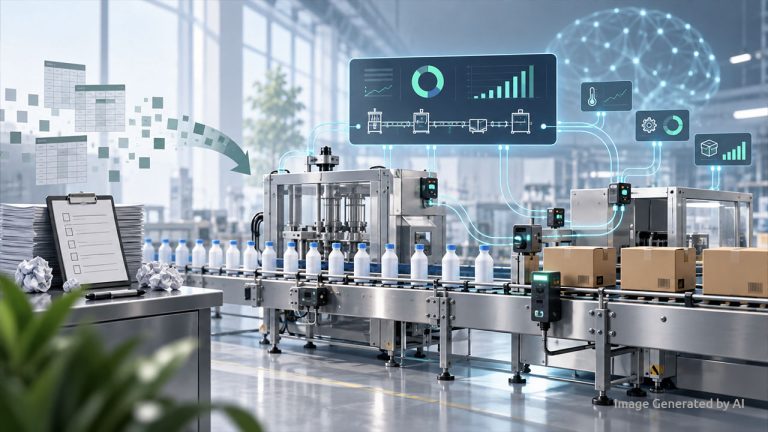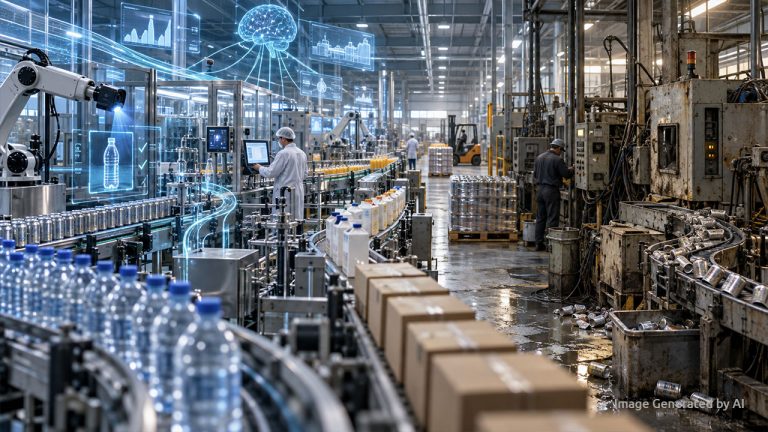
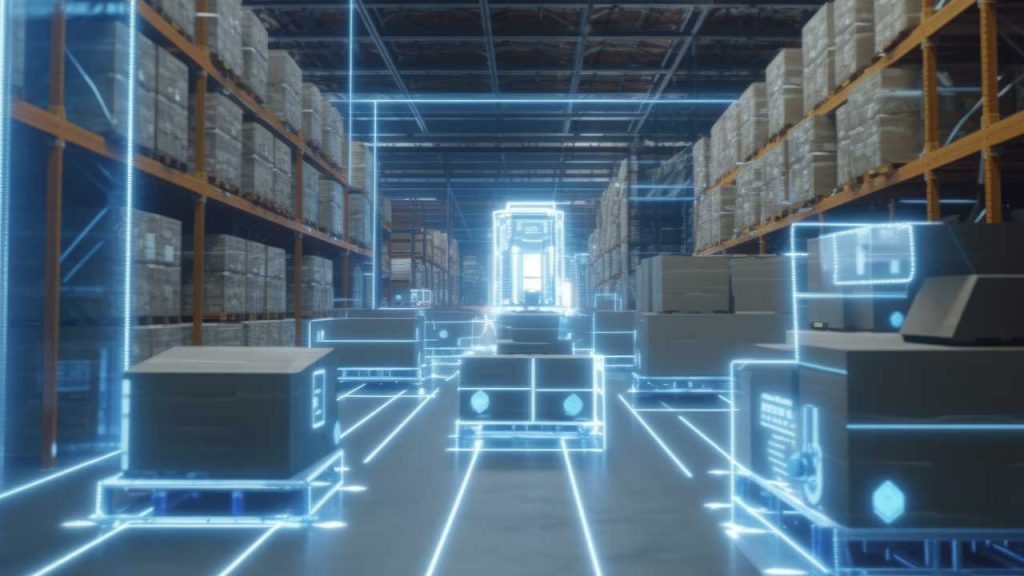
Smart warehouse integration connects Warehouse Management Systems (WMS), Transportation Management Systems (TMS), ERP platforms, IIoT sensors, APIs, robotics, AI, and digital twins into a unified supply chain. One packaging manufacturer achieved a 9% rise in overall equipment effectiveness (OEE) and avoided $25M in capital costs through predictive maintenance. Robots typically deliver 200-300% faster pick rates compared to manual methods.
What Technologies Power Smart Warehouses?
Smart warehouses rely on five core technology categories: IIoT sensors, cloud APIs, AI and machine learning, robotics and automation, and digital twins. Each addresses a distinct operational gap, from real-time visibility to predictive planning. Together, they reduce manual work, cut lead times, and give supply chain managers early warnings of equipment failures or bottlenecks.
How Does IIoT Improve Warehouse Visibility?
Industrial IoT (IIoT) sensors mounted on machines, vehicles, and storage racks collect real-time data on location, condition, and equipment performance. In manufacturing, one packaging manufacturer saw overall equipment effectiveness (OEE) rise by 9%, generating $25M in avoided capital costs through predictive maintenance. In energy, IoT devices on oil rigs and pipelines share drilling and pressure data to central systems, creating measurable efficiency gains in remote operations.
How Do APIs Connect WMS, TMS, and Carriers?
APIs allow a Warehouse Management System (WMS) or ERP platform to exchange data with carrier systems, Transportation Management Systems (TMS), and customer portals in real time. Unlike batch EDI transfers, APIs support instant rate shopping, order booking, label printing, and shipment tracking. A unified cloud platform ensures that inventory counts, order changes, and carrier updates propagate immediately across every stakeholder, from procurement to shipping.
How Does AI Optimize Warehouse Operations?
AI and machine learning apply data-driven intelligence to demand forecasting, carrier selection, and fulfillment scheduling. Advanced algorithms predict replenishment needs to reduce stockouts and overstocks. Machine learning models assign orders to the best carriers based on historical performance and cost data. AI-powered optimization through digital twins and simulations has been shown to improve on-time delivery by approximately 20% while cutting labor costs by 10%.
What Productivity Gains Come from Warehouse Robots?
Robotic pickers, autonomous mobile robots (AMRs), voice-directed picking systems, and pick-to-light racks replace paper-based processes and reduce human error. Deploying robots typically yields 200-300% faster pick rates, and digitizing warehouse processes can boost worker productivity by approximately 25%. These automated systems integrate directly with WMS platforms, triggering actions such as auto-printing shipping labels or booking carrier pickups as items are scanned and picked.
What Are Digital Twins in Supply Chain Management?
A digital twin is a virtual replica of a warehouse or supply chain that ingests live data from IIoT sensors, machines, and transportation feeds to simulate how operational changes affect outcomes. Paired with AI, digital twins run thousands of what-if scenarios, such as a port strike or demand surge, and adjust plans accordingly. One study found that digital twin-driven planning helped a global manufacturer cut freight and damage costs by approximately 8%.
How Do You Integrate WMS, TMS, and ERP Systems?
Integrating WMS, TMS, ERP platforms, and carrier systems requires APIs or integration platforms that share data in real time. A hybrid EDI and API approach lets businesses preserve existing EDI document flows while adding real-time updates. For example, APIs can push shipment status to customers and sales teams without waiting for next-day EDI batch feeds, improving transparency across the supply chain without replacing legacy infrastructure.
- Connecting WMS, TMS, and Carriers: Use APIs or integration platforms so every system shares data in real time. For example, your WMS can automatically pull live freight rates and book shipments through carrier APIs, eliminating manual quoting. A unified cloud platform ensures order, inventory, and transport information is visible enterprise-wide.
- Standardized Data Exchange: While many firms still use EDI for documents, modernizing means adding real-time APIs. A hybrid EDI+API approach lets businesses benefit from instant updates. For instance, APIs can push shipment status to customers and sales reps without waiting for next-day EDI batch feeds, improving transparency and responsiveness.
- Automated Workflows and Rules: Build business rules into your systems. Orders can auto-route to preferred carriers based on destination, weight, or service level. Exceptions (e.g. over-sized freight) can trigger approvals or alternate routing. When rules and AI logic are embedded in the workflow, tasks like tendering loads, consolidating orders, and issuing invoices can run automatically.
- Cloud Collaboration Platforms: Use cloud-based control towers or supply chain platforms that centralize data. When sales, warehouse, and logistics teams view the same dashboard, coordination improves. For example, if an IoT sensor reports a machine breakdown, dispatchers immediately see a reduced output forecast and can reschedule shipments or adjust carrier plans. Research shows that such end-to-end visibility and automation cuts lead times and errors, one analysis found that integrated digital supply chains automated order processing and shipping updates, greatly shortening fulfillment cycles.
Treat carriers and 3PLs as extensions of your operation. The right freight carriers (or 3PL partners) support your technology stack. In practice, this means choosing carriers with open APIs/EDI and broad networks, so they can plug into your workflows. Integrated partners will send tracking updates, delivery confirmations, and exception alerts directly back into your system. For example, a synchronized warehouse-carrier network can instantly queue a shipment for same-day pickup as soon as goods are packed. Companies that integrate logistics processes end-to-end see faster shipments and higher accuracy, since data flows automatically from orders through to final delivery.
Conclusion
Today’s warehouses are not just storage sheds; they are smart, interconnected nodes in the supply chain. Leveraging IIoT sensors, cloud APIs, AI analytics, robotics, and digital twins transforms logistics into a competitive advantage. Integrated systems reduce manual handoffs and errors: for example, automated picking and instant carrier booking can shorten fulfillment cycles from days to hours. Industry data bear this out, deploying these technologies can improve on-time delivery by ~20% and significantly lower operating costs.
Ultimately, treating carriers and warehouses as part of the same ecosystem, connected by APIs and intelligence, turns integration into business value. In 2025 and beyond, companies that implement these strategies will see shorter lead times, leaner inventories, and the flexibility to respond instantly to change.
About the author
This article was authored by Roqhaiyeh Eghbali, a Digital Marketing Specialist at OLIMP Warehousing. OLIMP Warehousing provides innovative warehousing and logistics solutions, helping businesses streamline their operations and improve efficiency.
Related articles: